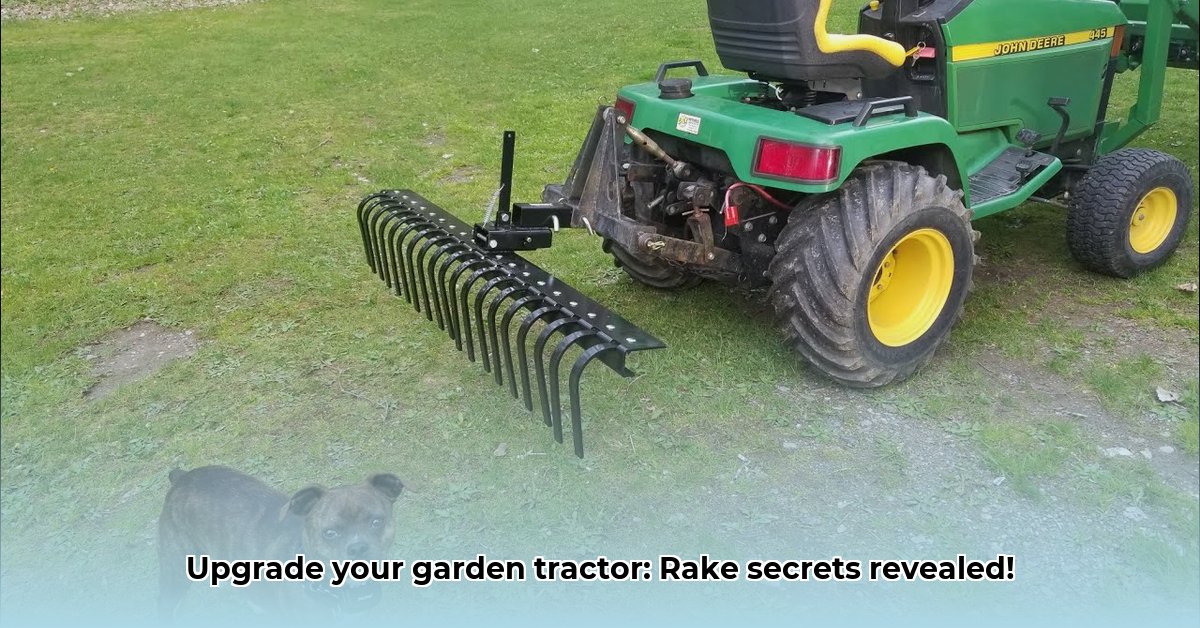
Choosing the right tractor-mounted landscape rake is crucial for efficient and sustainable land management. This guide will help you select, operate, and maintain a rake, minimizing environmental impact and maximizing long-term savings. We'll cover everything from sustainable sourcing to responsible disposal, empowering you to make informed decisions for a greener future. For more options, check out this helpful resource on tractor rakes.
Selecting the Perfect Rake: Size, Style, and Sustainability
The ideal rake depends on your land size, soil type, and the tasks you'll perform. Don't simply choose the cheapest option; consider these factors for optimal performance and longevity:
Rake Dimensions and Functionality
Working Width: The width of your rake directly impacts efficiency. A wider rake (e.g., 6 feet) covers more ground faster, saving time and fuel. However, consider your tractor's horsepower and maneuverability, especially in tight spaces. A smaller rake (e.g., 4 feet) might be more suitable for smaller areas or those with obstacles.
Tooth Type and Spacing: Different teeth are suited to different tasks. Heavy-duty, close-spaced teeth excel at clearing heavy debris and thick brush. Wider-spaced teeth are better for smoothing and light grading, minimizing soil disturbance. Choose based on the primary applications on your land.
Gauge Wheels: These are essential for precise depth control, preventing excessive soil disruption that harms soil health. They enable you to achieve an even grade ideal for planting and land management. Properly adjusted gauge wheels are crucial for efficient and sustainable operation.
Material Selection and Environmental Considerations
Material and Construction: High-quality steel is generally recommended for durability and longevity, minimizing the need for frequent replacements and reducing waste. Look for rakes from manufacturers who prioritize strength and reinforce welds. High-quality construction translates to fewer repairs and a longer product lifespan.
Sustainable Sourcing: Seek out manufacturers committed to sustainability. Inquire about their use of recycled materials (like recycled steel), their manufacturing processes, and their commitment to minimizing their environmental footprint. This proactive approach supports ethical and eco-conscious practices.
Sustainable Sourcing: Farming Green, From the Ground Up
The environmental impact begins with manufacturing. Support manufacturers who prioritize:
Recycled Materials: Look for rakes containing significant recycled steel or other recycled components. This reduces demand for virgin materials and lowers the overall carbon footprint.
Responsible Manufacturing Practices: Inquire about manufacturers’ energy use, waste reduction strategies, and overall commitment to environmental stewardship. Choosing such manufacturers actively supports sustainable agricultural practices and responsible production processes.
Getting the Most From Your Rake: Operational Best Practices
Proper operation is crucial for maximizing efficiency and minimizing environmental impact. Follow these best practices:
Pre-Operation Inspection: Always inspect your rake before each use. Check for loose bolts, bent teeth, or any damage. Addressing small issues promptly can prevent major problems. Regular inspections are essential for proactive maintenance and avoidance of costly repairs.
Setting the Depth: Precise depth control is paramount. Adjust gauge wheels to achieve the desired depth without over-tilling. Excess soil disturbance harms soil health and reduces the efficiency of your rake.
Overlapping Passes: Slightly overlap each pass to ensure even coverage and avoid missed spots. This approach ensures consistency of results and leads to improved efficiency.
Appropriate Speed: Adjust your tractor's speed to the terrain and the task. Slower speeds are generally preferable for uneven ground or delicate areas, preventing damage to both the rake and to the soil.
Post-Operation Cleaning: Always clean the rake after each use to remove mud, debris, and stones. This prolongs its life and enhances its overall performance. Maintaining a clean rake reduces the impacts of wear and tear.
Maintaining Your Investment: Extending the Life of Your Rake
Regular maintenance is key to maximizing the lifespan of your rake.
Lubrication: Lubricate all moving parts regularly to prevent wear and tear. Regular lubrication significantly reduces friction and extends the functional life of the moving components.
Inspection and Repairs: Conduct regular inspections for wear and tear. Address small issues promptly; delaying repairs often leads to more extensive (and expensive) damage. Proactive maintenance avoids major breakdowns.
Storage: Store your rake under cover to protect it from the elements. Proper storage protects your investment and significantly extends the lifespan of the rake by avoiding corrosion and damage.
Responsible Disposal: When it’s time to replace your rake, dispose of it responsibly, following local recycling guidelines for metal components. Responsible disposal minimizes waste and promotes environmental stewardship.
Real-World Success and Cost-Benefit Analysis
Many farmers report significant benefits from using landscape rakes. These include increased efficiency, reduced labor costs, and improved soil health. The improved soil structure contributes to long-term sustainable yields.
A cost-benefit analysis shows that while the initial investment might be higher than manual methods, significant long-term savings are found due to reduced labor, fuel efficiency and increased lifespan. The long-term benefits of improved soil health should also be accounted for in the overall assessment.
Addressing Potential Risks: Safe and Sound Farming
While generally safe, operate your rake safely and responsibly:
- Tine breakage/bending: Use robust materials and avoid overloading the rake.
- Swivel point failure: Address lubrication issues promptly.
- Tractor incompatibility: Verify compatibility before purchase. Regular safety checks and adherence to manufacturer guidelines are essential for risk mitigation and safe operation.
Remember, sustainable land management is a holistic approach. Choosing, operating, and maintaining your rake responsibly contributes significantly to environmental stewardship and long-term success in sustainable agriculture.